Keep a fire extinguisher for home use somewhere easy to reach, ideally near an exit. The kitchen may come to mind first, but electrical appliances, heaters and stored items can also start fires. Some properties use systems such as FM200 in enclosed spaces, alongside portable extinguishers and smoke alarms.
Where Should You Keep a Fire Extinguisher at Home?
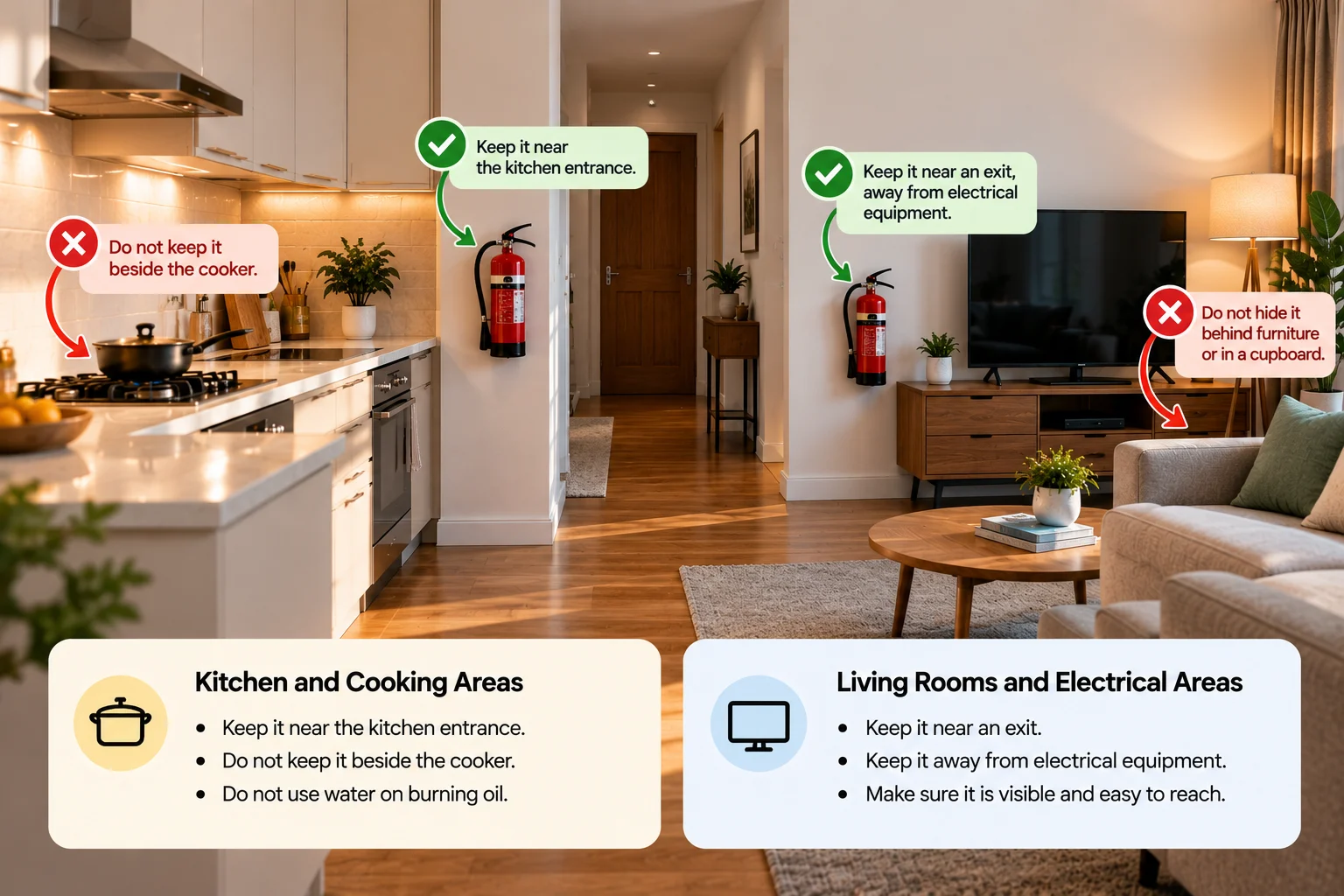
The right spot depends on the room and the risks in it. Keep an extinguisher visible and make sure you can reach it without moving towards a fire.
Kitchen and Cooking Areas
A pan left on the hob or overheated oil can cause a kitchen fire. Keep a suitable extinguisher near the kitchen entrance, not beside the cooker, where flames could block access.
Never pour water onto burning cooking oil. A fire blanket may help with a small pan fire, but only use it if you can approach safely. If the fire spreads or smoke fills the room, leave and call emergency services.
Living Rooms and Electrical Areas
Televisions, chargers, extension leads and other appliances can become fire hazards when cables are damaged, or sockets are overloaded. Keep a suitable fire extinguisher near an exit, away from the equipment that could catch fire.
Avoid storing extinguishers behind furniture or inside locked cupboards. Everyone at home should know where they are and how to use them. Check the label to confirm that the extinguisher is suitable for electrical fires.
Bedrooms, Hallways and Garages
Keep hallways and stairs clear so everyone can get out quickly. An extinguisher should not block a doorway or narrow passage. Smoke alarms near bedrooms can also alert people to a fire while they are asleep.
Garages and storage areas may contain petrol, paint, batteries and other flammable materials. Pick an extinguisher that matches the specific hazards in the area. Store it somewhere easy to reach, but keep it away from anything hot.
Which Fire Extinguisher Should You Choose?
Different fires need different extinguishers. Check the product label and consider what could catch fire in your home before choosing one.
Match the Extinguisher to the Fire Risk
| Type of fire | Common examples |
Suitable extinguisher |
|
Ordinary combustibles |
Paper, wood and fabric |
Water or suitable ABC dry powder |
| Flammable liquids | Petrol, paint and solvents |
Foam or suitable dry powder |
|
Electrical equipment |
Appliances and electrical panels |
CO₂ or suitable dry powder |
|
Cooking oils and fats |
Cooking oil and deep-fat fryers |
Wet chemical |
This is a general guide. Always check the extinguisher’s label and follow local fire-safety advice. Fire extinguishers should be maintained and used only on small, contained fires when you know how to operate them and have a clear exit.
ABC Dry-Powder Extinguishers and FM200 Systems
ABC dry-powder extinguishers can handle several common household fire risks. However, the powder can spread through a room, reduce visibility and irritate the airways. Using one in a small, enclosed space may make it harder to see and breathe.
FM200 is a clean-agent fire suppression system used in certain enclosed areas, such as rooms with sensitive equipment. It is a fixed system, not a portable extinguisher for general household use, and does not replace an escape plan.
What Other Fire Safety Equipment Should You Keep at Home?
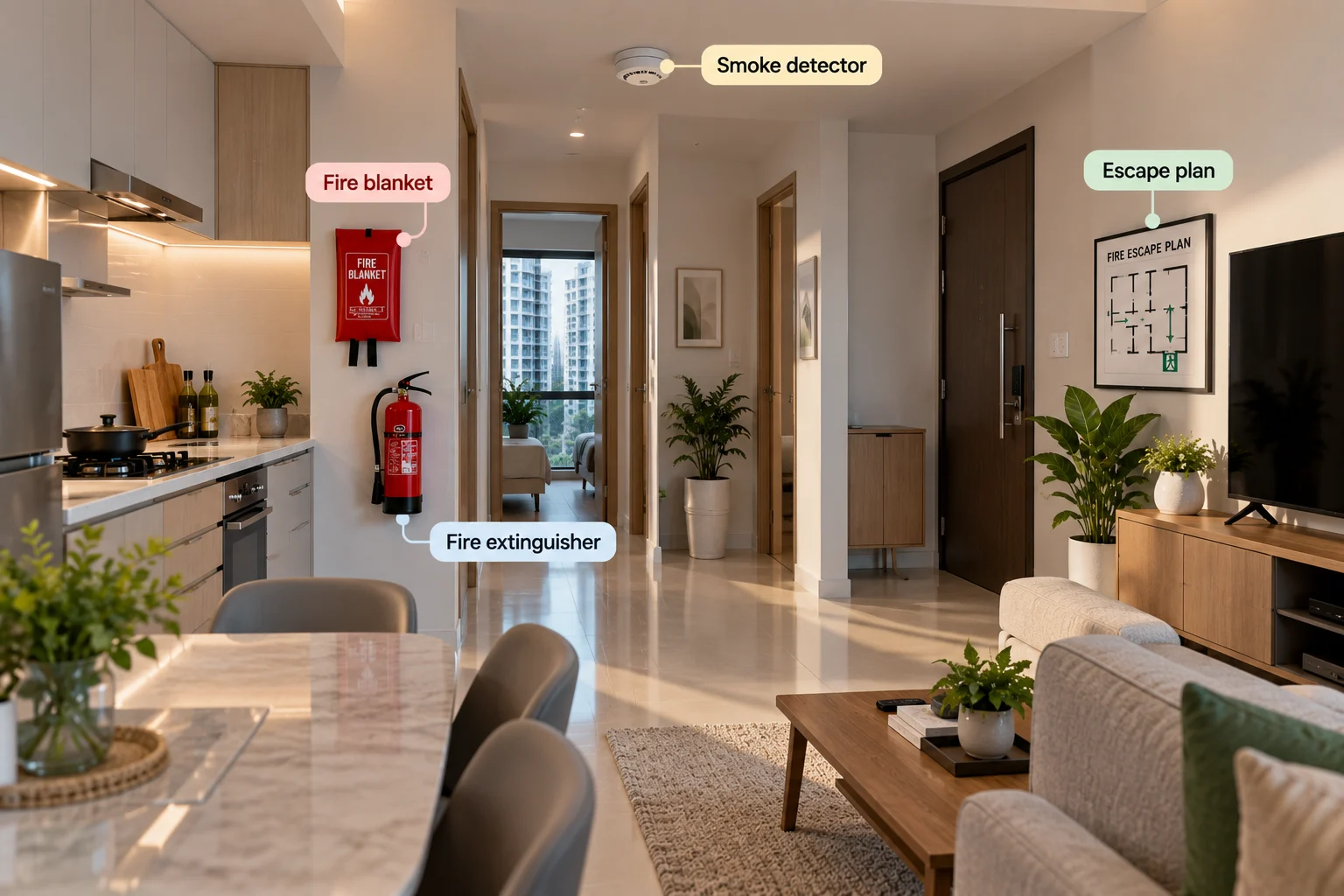
An extinguisher cannot alert you when a fire starts. Smoke alarms, fire blankets and a clear escape plan are also important parts of household fire safety.
Smoke Detectors and Fire Blankets
Smoke detectors save lives by alerting you before smoke fills the room, giving you time to get out safely. Put them in smart spots in your home, check them regularly, and swap out the batteries when they’re low—or get a new detector if it’s no longer effective.
A fire blanket may help with a small, contained pan fire, provided it is safe to use. Keep it somewhere accessible, but do not approach a spreading fire to retrieve it.
A few simple habits can also reduce fire risks:
– Keep stairs, hallways and exits clear.
– Store matches and lighters out of children’s reach.
– Don’t plug too many things into one electrical socket.
– Store flammable liquids in proper containers and keep them far from heat sources.
– Pick an outdoor spot for your group to meet up during emergencies, and make sure everyone remembers where it is.
Check Your Fire Extinguishers Often
Look for any dents, leaks, or signs it’s been used, and check if the service date is still good. Keep it somewhere easy to grab, and follow the manufacturer’s advice for inspections or maintenance.
Don’t forget about your smoke detectors—test them on a regular basis. Swap out batteries or change the whole unit if something’s not working right. Leave fire blankets in their packaging so they stay clean and ready, and don’t stack things on top of them.
Fire Safety at Home
When it comes to fire safety at home, make sure everyone knows how to get out. Point out the nearest exits and decide on a spot outside where you’ll all meet. Walk through your escape route together, and think ahead about helping kids, older family members, or anyone who needs assistance.
Only use a fire extinguisher if the fire is small and you’re sure you know how it works—and if you have a clear way out. If the fire’s getting bigger or there’s a lot of smoke, just leave right away and call emergency services. Your safety comes first; don’t try to handle a fire if it puts you at risk.
Getting Your Home Ready for Fire Emergencies
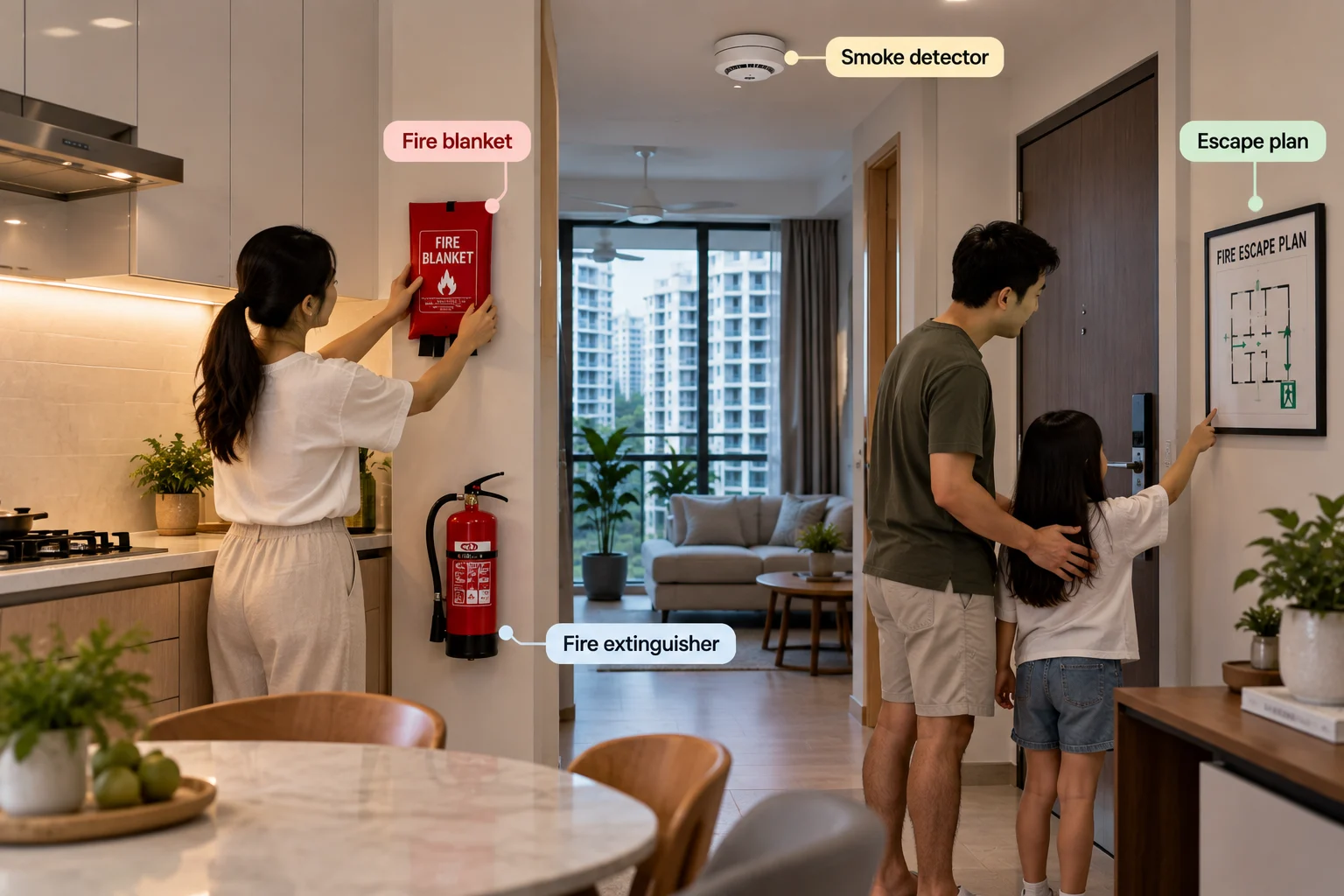
Firetronics offers a residential fire-safety kit containing a smoke alarm, fire blanket and 1 kg ABC dry-powder extinguisher. Place each item where it can be reached easily, taking the layout of your home and possible fire hazards into account.
A fire extinguisher for home use is useful when it is accessible and suitable for the fire involved. Review your equipment, make sure escape routes aren’t blocked, and talk through the plan so everyone knows what to do. If a fire breaks out, just focus on getting out fast and safely. That’s what really counts.